Battery, Seals and Software Years: Choosing a Refurbished Apple Watch That Actually Lasts
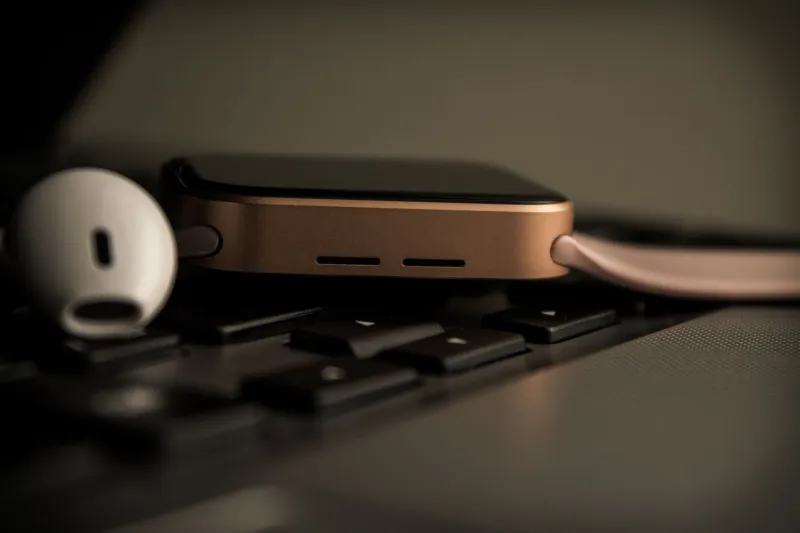
Shopping for a refurbished Apple Watch is a strange experience. The photographs are lovely. The words 'excellent condition' appear approximately four times per listing. And yet the single fact that will determine whether you are still happily wearing this thing in 2029 — the state of a battery roughly the size of a postage stamp — is usually nowhere to be found.
So let us talk about the three models that dominate the UK refurbished market in 2026, and do it properly.
Why 'excellent' is a cosmetic grade, not a health report
Condition labels in the refurb world describe the outside of a device. They are applied by someone holding it, tilting it under a lamp and checking for scuffs. That is genuinely useful information — a badly scratched case is a real thing to avoid — but it says nothing about the components that wear invisibly.
An Apple Watch can be cosmetically flawless and still have a battery that has quietly slid to 79 per cent of its original capacity, at which point Apple considers it due for service. It can look pristine and have a water-resistance seal that has spent four summers in a swimming pool and is now considerably less watertight than the spec sheet implies.
Cosmetic grade is a starting point. It is not the decision.
The three realistic contenders
The Series 7 landed in autumn 2021 with an always-on display, ECG, blood oxygen sensing and a slightly larger screen than its predecessor. The SE 2 followed in 2022, stripped of the always-on display, the ECG and the blood oxygen sensor, but with the same chip as the Series 8 and a much friendlier price. The Ultra arrived the same year with a titanium shell, a genuinely large battery, WR100 water resistance and a price that made people laugh nervously.
By 2026, all three are firmly in refurbished territory. Typical UK asking prices float around £150–£200 for a Series 7, £130–£170 for an SE 2 and £350–£450 for a first-generation Ultra, depending on size, finish and cellular capability. Those are the numbers to hold in your head.
The battery conversation you need to have before paying
Here is the single most useful sentence you can send a seller: can you send a screenshot of the Battery Health screen with the maximum capacity figure visible?
On watchOS, that lives in Settings > Battery > Battery Health, and it shows a percentage. Anything at 90 per cent or above is a strong result for a used Watch. Between 85 and 90 is reasonable. Below 85, you should be negotiating hard or walking away, because you are buying someone else's degradation curve.
Note that Apple Watches do not expose cycle counts the way iPhones and Macs do. So capacity percentage plus the age of the device is the best proxy you have. A three-year-old Watch at 91 per cent has probably led a gentle life. A two-year-old Watch at 84 per cent has not.
If you are buying from Apple's own refurbished store in the UK, this particular worry evaporates — Apple fits refurbished Watches with a new battery and a new outer case, which is why they carry a full one-year warranty. You are paying a premium for that certainty, and for a Watch it is arguably worth it.
Water resistance has a shelf life
This is the part nobody mentions. Apple is explicit that water resistance is not a permanent condition, and it declines with normal wear as the adhesives and seals age. On Apple Watch, Apple does not offer a water-resistance re-test or re-seal service at all.
Practically, that means a 2021 Series 7 that has been worn daily, showered in and swum in is a different proposition from a new one, even though both say 50 metres on the box. If you actually swim, surf or spend time in the sea, an Ultra's chunkier sealing and 100-metre rating is more than a marketing line — it is a margin for ageing. If you take your Watch off before you get in the water, this whole section barely applies to you.
For everyone else: do not assume a refurbished Watch is safe for pool lengths just because the specification says so. Ask how it was used. Most sellers will not know, which is itself an answer.
Bands: the overlooked hygiene question
Refurbished Watches are frequently sold with a band, and the band is often described in one word. Fabric Sport Loops absorb sweat and are difficult to properly sanitise. Fluoroelastomer sport bands clean up well with soap and water. Leather and Milanese loops are somewhere in between and, in the case of leather, degrade visibly.
Two things are worth doing. First, ask whether the band is genuine Apple or third-party — plenty of refurbished listings pair a Watch with a generic strap and photograph it as though it came from Cupertino. Second, treat a used fabric band as a consumable. Budget £49 for a replacement and consider it part of the purchase price. If you have a nickel sensitivity, stick to the fluoroelastomer options and avoid the stainless steel bands entirely.
Also check the band release mechanism and, on older units, whether the case shows corrosion around the digital crown and speaker slots — a sign of salt water exposure.
The software runway matters more than the spec sheet
Apple supports Apple Watches for roughly five to six years from release, sometimes a touch longer. That gives you a rough map: the Series 7, launched in 2021, is nearest the cliff edge. The SE 2 and the Ultra, both from 2022, have a bit more room. None of them is a foolish purchase in 2026, but the Series 7 is the one where you should be thinking in two-year horizons rather than four.
Check the watchOS version currently installed and confirm it is still receiving updates. A Watch stuck two major versions behind is not broken, but it will lose app compatibility and pairing support sooner than you would like.
The verdict, roughly
If you want the longest usable life per pound and you can live without an always-on display or an ECG, the SE 2 is the sensible buy. It has the newer silicon, a cleaner support runway and the lowest entry price, which leaves budget for a fresh band and a proper screen protector.
If the always-on display and the health sensors matter to you — and for a lot of people they genuinely do — the Series 7 is the sweet spot, provided you get a battery screenshot above 88 per cent and accept that you are buying the last third of its software life.
The Ultra is the one to buy if you swim, hike, dive or simply hate charging. Its battery is the difference between a nightly ritual and a genuine two-day device, and its sealing has more headroom for age. It is also the model where a refurbished unit in genuinely good nick represents the largest saving against new.
Whichever you pick, get the battery number in writing, check the serial against Apple's coverage checker, and confirm Activation Lock is off before the money leaves your account. The photographs will still be there afterwards.