Grades, Gremlins and Small Print: Reading Refurbished Apple Condition Labels in the UK

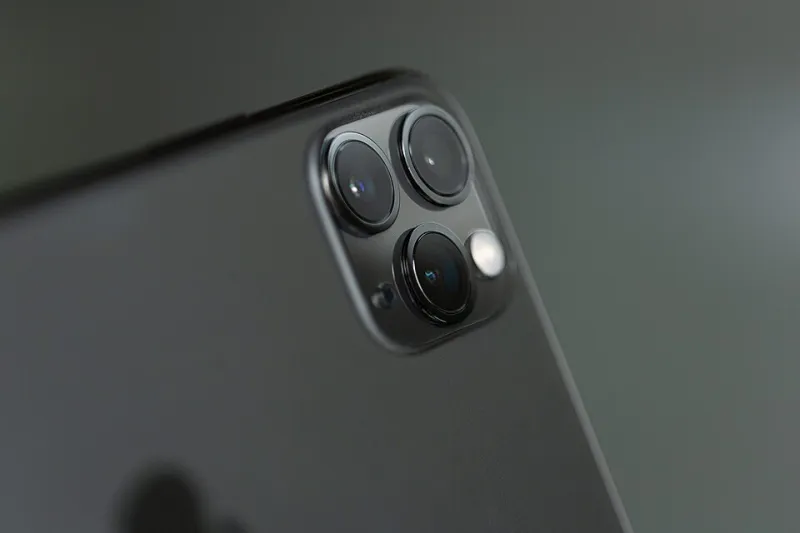
Photo: CEphoto, Uwe Aranas, CC BY-SA 3.0, via Wikimedia Commons
You've found the exact model you want. Two listings, same storage, same colour, broadly similar price — except one costs £60 more and is labelled 'Pristine' while the other is merely 'Excellent'. So what is that £60 buying? A flawless screen? A fresher battery? Or just a word a marketing team invented on a Tuesday afternoon?
Welcome to the murk of refurbished grading. It's the biggest source of confusion in the UK Apple refurb market, and it's also where most of the value — or the regret — hides.
There's no official grade, anywhere
Unlike energy ratings or IP water-resistance numbers, refurb condition grades aren't regulated, standardised or audited by anyone. Each reseller writes its own rubric. One retailer's 'Excellent' is another's 'Good', and a third might not use grades at all, preferring a paragraph of prose and a photo.
Apple's own Certified Refurbished store sidesteps the whole language game: every device gets a new outer shell and a new battery, plus a full one-year Apple warranty. That's the benchmark. Everything else is a reseller's interpretation, so the grade is only meaningful in the context of that specific seller's definition page — which is exactly why you should screenshot it before you pay.
What the words usually translate to
Broadly, across the major UK players, the ladder runs something like this:
- Pristine / Premium / Like new: no marks visible from a normal viewing distance. Possibly a faint micro-scratch on close inspection under bright light. Often the smallest stock pool, and priced accordingly.
- Excellent / Very good: light wear — hairline scratches on the back glass, a small scuff on a corner, a bit of shine on a keyboard. Nothing you'd notice once it's in a case.
- Good: visible cosmetic wear. Corner dents on a MacBook, scratches on an iPhone frame, maybe a screen mark that catches the light at an angle but doesn't affect the display.
- Fair: obvious dents, deeper scratches, sometimes a small chip. Cheapest tier, and the one where real photos matter most.
That's the theory. In practice, grades are inconsistently applied across product categories. A reseller's 'Excellent' iPhone might be tighter than its 'Excellent' MacBook, because the inspection rubric for each is written separately. Apple Watch and iPad tiers are often vaguer still.
Battery is the grade nobody prints on the label
Here's the thing that catches people out: cosmetic grade tells you almost nothing about battery health. A 'Pristine' iPhone 14 could sit at 84% battery health while a scuffed 'Good' one is at 93%. Apple treats 80% as the point where a battery needs attention, so anything in the mid-80s is on the downhill slope.
Ask before you buy — battery health percentage and cycle count, in writing, ideally over chat or email so there's a record. Some resellers promise a minimum (85% is a common floor, and the better premium tiers stretch to 90%+); others stay silent on the number entirely. Silence is not a guarantee.
MacBooks are trickier. macOS reports cycle count and condition rather than a raw percentage, so ask for the cycle count and whether 'Service Recommended' has appeared. Under 300 cycles on a two-year-old machine is a decent sign. Over 700 and you should be factoring in a replacement — roughly £130–£200 depending on model, which can wipe out the saving entirely.
Check the box that isn't there
Accessories vary wildly. Some sellers include a new USB-C cable; some include a charger; some include neither. Original boxes frequently aren't included at all, which matters if you plan to resell or gift it.
Factor the missing bits into your maths. A decent 30W USB-C charger plus a braided cable is £25–£35 if you don't already have one. If the cheaper listing saves you £30 but arrives bare, you've saved nothing.
Also confirm the device is signed out of iCloud and free of activation lock, and that cellular iPads and iPhones aren't network-locked to a carrier.
Warranty is the spec that actually matters
A grade describes a device on the day it shipped. A warranty describes what happens when the logic board dies in month seven. That's the difference between a bargain and a gamble.
UK resellers typically offer 12 months, with some stretching to 24 on premium tiers or paid upgrades. Apple Certified Refurbished gives you a standard Apple one-year warranty, which means Genius Bar appointments and the option to add AppleCare — a meaningful advantage if you're near a store.
Ask three questions: who honours the warranty (the reseller or a third-party insurer), is it repair or replacement, and does it cover accidental damage or only hardware faults? Most exclude drops, and a few have a claims excess.
Your legal backstop doesn't care about grades
Under the Consumer Rights Act 2015, goods must be as described, of satisfactory quality, and fit for purpose. Note the first one: if a listing says 'Excellent' and the device arrives with a cracked corner, that's a straightforward not-as-described claim regardless of what a rubric somewhere says.
You get a 30-day short-term right to reject for a full refund, then the right to repair or replacement, then a price reduction or final right to reject. In England, Wales and Northern Ireland you can bring a claim up to six years after purchase (five in Scotland).
Buying online also gives you a 14-day change-of-mind cancellation right under the Consumer Contracts Regulations 2013 — useful if the grade turns out to be optimistic. Just check who pays return postage, because that's often you.
And if you're spending over £100, put it on a credit card. Section 75 makes the card provider jointly liable if something goes wrong.
A five-minute checklist before you pay
- Screenshot the seller's grade definition as it appears today.
- Ask for photos of the actual unit — not stock imagery of the model.
- Get battery health and cycle count in writing.
- Confirm exactly what's in the box.
- Note the warranty length, who honours it, and whether it's transferable.
- Read the returns policy: window length, postage, restocking fees.
- Check recent reviews for repair-claim experiences, not just delivery speed.
So which grade should you buy?
If the jump from 'Good' to 'Pristine' costs under 10% of the price and you plan to keep the device four or five years, the premium is defensible. If it's 20% or more, take the scuffed one, add a case and a screen protector, and put the difference towards a bigger SSD or a spare charger.
The grade is a marketing label. The battery, the warranty and the seller's returns policy are the actual product. Judge those, and the sticker becomes a lot less mysterious.