Kilograms and Caveats: The Honest Green Maths of a Refurbished Apple Buy in 2026

There is a number on every Apple product page now, tucked under the tech specs like a footnote to a mild guilt trip: kilograms of CO2 equivalent, measured across the device's whole life. It is genuinely useful information. It is also the most misquoted figure in the refurbished market, usually by sellers who would like you to believe that a Grade B MacBook Air is roughly equivalent to a small reforestation project.
It isn't. But the truthful version of the story is better than the marketing one, because it comes with caveats you can actually use when you're standing in front of a checkout page deciding whether to spend £600 or £1,100.
What the manufacturer's number is actually counting
Apple publishes a Product Environmental Report for basically everything it sells. The headline figure is cradle-to-grave: extracting and refining materials, making components, assembly, transport, an assumed stretch of use — typically around four years for a Mac, three or so for an iPhone — and recycling at the end.
Across the range, manufacturing dominates. Usually somewhere between 70% and 80% of the lifetime total sits in the making, not the using. Shipping is a rounding error, generally low single-digit percentages even for something freighted in from Asia. The use phase matters more for a phone you charge nightly than for a laptop, but it still plays second fiddle to the factory.
That single fact tells you where the saving lives. A refurbished machine doesn't dodge the end-of-life cost, and it doesn't dodge the electricity you'll pour into it. What it defers is the enormous bit: building another one.
The MacBook: the chunky receipt
Laptops carry the biggest numbers, which makes them the strongest green case in the refurbished catalogue. The 13-inch MacBook Air with an M3 chip lands around 128kg CO2e in its base configuration. The M1 Air sits nearer 110kg. A 14-inch MacBook Pro can run anywhere from about 150kg to well over 200kg depending on chip and storage. Older Intel Airs were frequently north of 200kg before Apple got serious about recycled aluminium and lower-carbon shipping.
If manufacturing is three-quarters of that, then keeping a working laptop in service avoids something in the region of 80kg CO2e on an M1 Air — and considerably more on a Pro. Not the full figure, because the refurbisher has shipped the thing at least twice, tested it on powered rigs, possibly replaced a battery or a top case, and printed a box for it. But the overwhelming majority survives contact with reality.
There's a second multiplier people miss. A refurbished Mac doesn't just avoid a new build; it extends the service life of an old one. The same manufacturing footprint gets spread across more years. That's why the useful metric isn't kilograms saved per purchase, it's kilograms per year of service you actually get out of the machine.
The iPhone and iPad: smaller numbers, sharper caveats
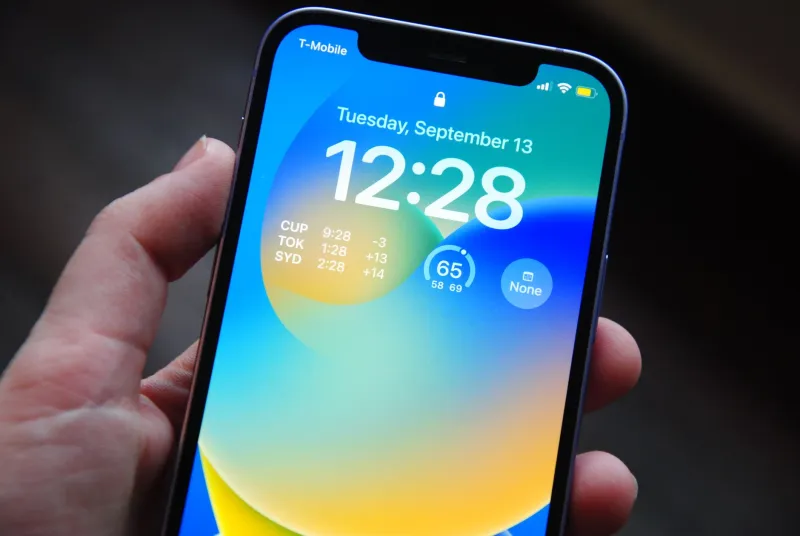
Phones and tablets are lighter, simpler and less material-hungry, and the figures reflect it. An iPhone typically lands somewhere between 55kg and 80kg CO2e depending on model and storage. An iPad ranges from roughly 50kg to 90kg. A refurbished iPhone bought instead of a new one therefore saves maybe 40 to 55kg — real, but nothing like the laptop figure.
Which changes the argument. On a phone, the green case is weaker per pound spent, so lifespan becomes the deciding variable. If the handset you're eyeing has already burned through two of its software years, you may be buying a device that needs replacing sooner than you'd like. Replace it early and you've bought two rounds of packaging, two rounds of courier, and none of the manufacturing saving you were promised. The carbon maths and the money maths point the same way here, which is convenient.
The bits nobody puts in the brochure
Reconditioning has a footprint, and honest sellers don't pretend otherwise. Test rigs draw power. Cosmetic cleaning uses consumables. Replacement parts are the heavy hitters — a screen assembly or a top case carries meaningful embodied carbon, a battery considerably less. Then there's the packaging, which in the refurb world is often newly manufactured and occasionally rather lavish.
The sneaky one is returns. UK distance-selling rules give you fourteen days to change your mind, and a returned device frequently makes a second round trip across the country. Each parcel is trivial in isolation — a courier delivery is usually a few hundred grams of CO2e at most — but it is a genuine nibble, and one reason to choose carefully rather than order three and send two back.
None of this comes close to cancelling the saving. It just means the number is a range, not a certificate.
Where the savings genuinely leak
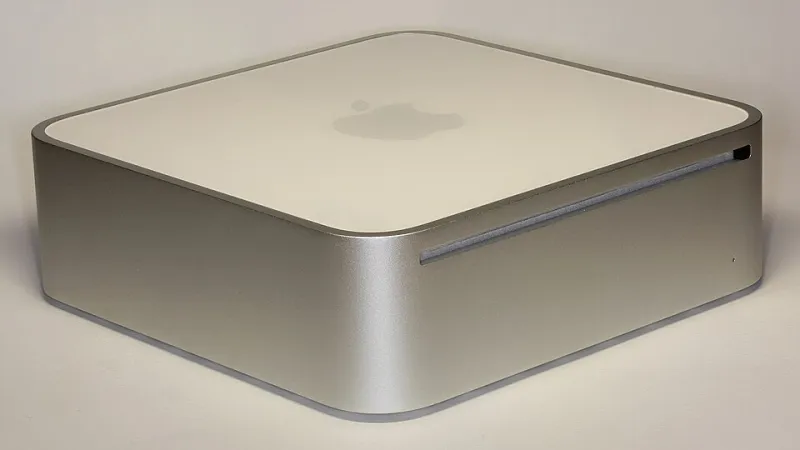
The classic leak is buying a refurbished device as a second device rather than a replacement. A spare Mac mini for the telly, a backup iPhone for festivals: pleasant, but you've added a whole product's worth of embodied carbon to your household rather than displacing anything. Refurbished only pays environmentally when it stands in for something you would otherwise have bought new.
The second leak is buying too old too cheaply. A machine with two macOS upgrades left in it is not a green purchase if it lands in a drawer in 2029. The third is a tired battery you end up replacing within twelve months — that's an avoidable extra part and an extra repair journey. The fourth is buying from a seller whose idea of refurbishment is a wipe and a photograph; the device will come back to bite you, and returns are carbon too.
There's one anti-leak worth celebrating: selling the thing on when you're done. Passing a device down the chain keeps the manufacturing footprint amortising, and it's the single easiest sustainability act available to a UK household.
A three-question test before you pay
How many years of software support are left? Check the model against Apple's current macOS or iOS compatibility list. Roughly seven to eight years from release is the realistic runway for Apple silicon Macs, less for older stock.
What's the battery health and cycle count? Ask for it in writing. A phone at 82% health is a phone with a repair in its near future.
Is the green claim specific? A badge saying carbon neutral is decoration. A figure with a stated scope and a named methodology is a claim you can interrogate. If a seller can't tell you what they're measuring, they're not measuring much.
Then do the ledger that doubles as both a money calculation and a carbon one: price divided by remaining years of useful life. It's a brutal little sum. It flushes out the £250 Intel Mac and the too-good-to-be-true iPhone in one go, and it rewards exactly the purchases that keep kit in circulation longest.
The bottom line
Refurbished isn't an offset and it isn't a magic trick. It's a deferral of manufacturing, and deferred manufacturing is where practically all of the environmental value sits. Buy the newest device your budget sensibly allows, keep it for as long as the software lets you, hand it on rather than binning it, and treat the condition grade as a badge of good sense rather than a compromise. The carbon receipt isn't something you wave about. It's a ledger, and the entries that matter are the years, not the kilograms.